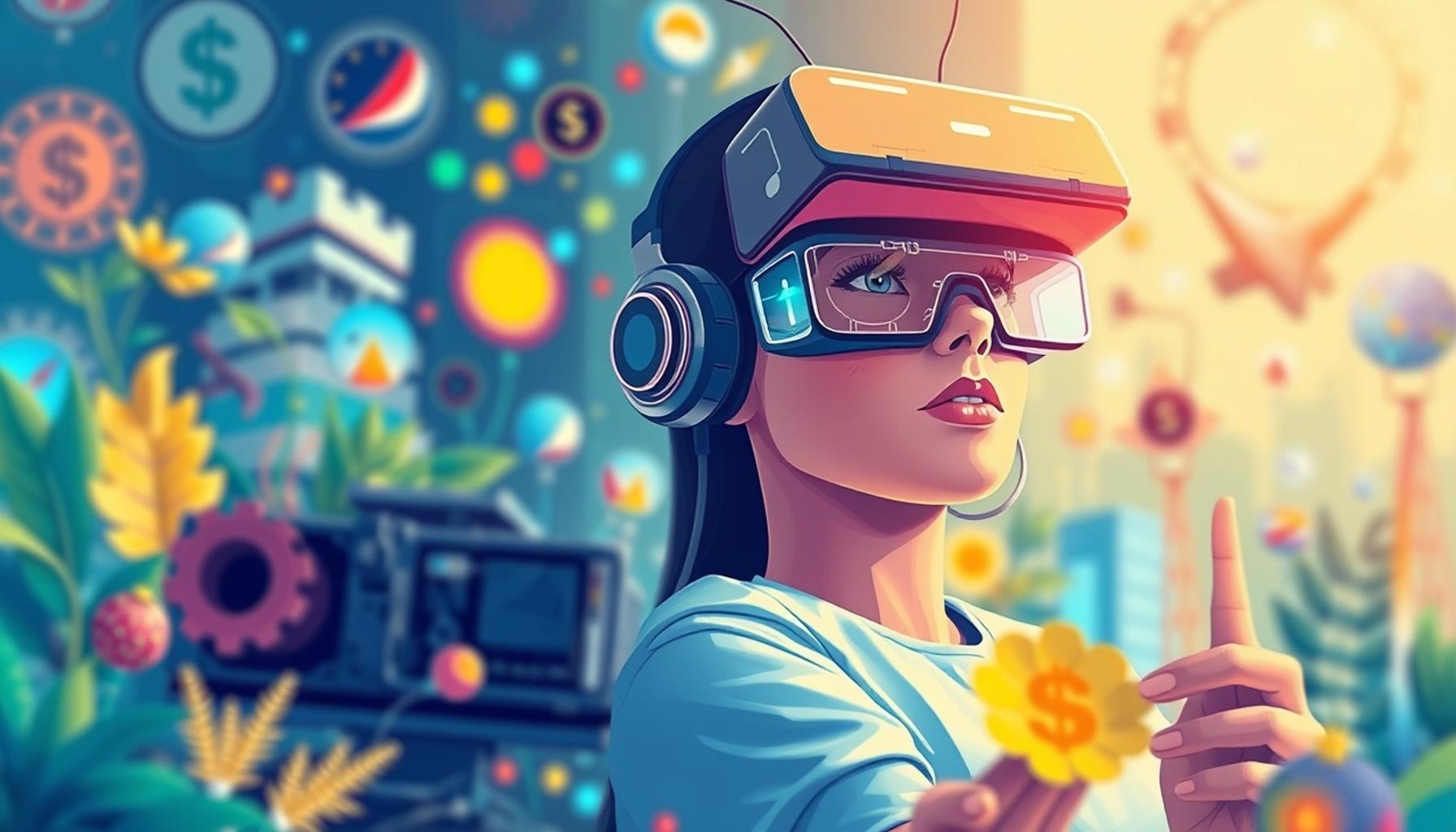
Augmented and Virtual Reality: The Impact of Immersive Technologies on Education

Transformative Impact of AR and VR in Education
In recent years, the rise of augmented reality (AR) and virtual reality (VR) has initiated a groundbreaking shift in how knowledge is imparted and received in educational settings. These immersive technologies not only capture the attention of learners but also enhance their understanding by allowing them to interact with educational content in ways that traditional methods simply cannot match.
Interactive Experiences: One of the standout features of AR and VR is their ability to create interactive experiences. For instance, students studying biology can use AR to visualize the complex structures of a cell. By manipulating 3D models, they can gain a better grasp of cellular processes such as mitosis or protein synthesis. This hands-on engagement enhances retention and understanding, as opposed to rote memorization from textbooks.
Realistic Simulations: These technologies offer learners the chance to practice real-world skills within a safe virtual environment. In vocational education, students can simulate tasks such as welding or carpentry. For example, students in an automotive program can use VR to take apart and reassemble car engines, making mistakes in a risk-free setting while learning valuable skills. This not only builds confidence but prepares them for their future careers without the fear of costly errors.
Personalized Learning: Additionally, AR and VR can adapt to suit individual learning styles. A student who struggles with written information may benefit from visual content that AR can provide, such as overlaying supplemental data on real-world objects. On the other hand, students who learn best through auditory means can engage with VR scenarios that involve auditory feedback, catering to a variety of preferences.
Practical Applications in Education
- Virtual Field Trips: Imagine a middle school science class able to explore the Great Barrier Reef or the surface of Mars, all from their classroom. Virtual field trips provide unique opportunities for exploration and learning about distant places without logistical constraints and expenses.
- Medical Training: Future healthcare professionals benefit immensely from VR simulations where they can engage in mock surgeries. This training phase is crucial; it allows students to practice and refine their techniques without the stakes involved in a real operating room.
- Language Learning: Innovative language programs utilize AR to create immersive environments for practice. Students may find themselves entering a virtual café in France, ordering coffee, and interacting with AI-driven characters, which builds context and confidence in their conversational skills.
While AR and VR present numerous advantages in education, they also come with challenges, such as costs and the need for adequate infrastructure. Schools must weigh these factors carefully to integrate these technologies effectively. However, the potential to enhance engagement, understanding, and practical skills makes AR and VR compelling options for the future of education.
In conclusion, by employing AR and VR, educators can offer richer, more engaging, and personalized learning experiences that prepare students for the demands of the 21st century. These technologies, when strategically implemented, can truly revolutionize how we approach teaching and learning across various disciplines.
SEE ALSO: Click here to read another article
Engagement and Motivation Through Immersive Learning
One of the most significant advantages of augmented reality (AR) and virtual reality (VR) in education is their ability to foster engagement and motivation among students. In a world where attention spans are dwindling, these immersive technologies provide an avenue for capturing and holding the interest of learners. By transforming conventional lessons into interactive adventures, educators can ignite a passion for learning that drives students to explore and understand subjects more deeply.
Gamification of Learning: The incorporation of game-like elements into learning experiences is another aspect where AR and VR shine. By utilizing these technologies, teachers can create educational games that challenge students in a fun and relatable context. For example, history lessons can be turned into interactive quests where students assume the roles of historical figures, solving challenges that require knowledge and critical thinking about specific events. Such gamified experiences can decrease anxiety around testing and near-universalize the retention of knowledge. Students not only remember facts better when they are associated with enjoyable activities, but they also develop a sense of achievement.
Collaborative Learning Environments: Immersive technologies can also foster collaboration among students, breaking down geographical barriers in the process. Through shared VR environments, students from different locations can work on projects together, engaging in discussions and group tasks just as they would in a traditional classroom setting. For instance, a group of students in different states might collaborate on a science experiment virtually, observing and manipulating 3D models to conduct their research. This collaborative approach promotes teamwork, communication skills, and cultural understanding, equipping students with valuable skills applicable beyond the classroom.
Enhanced Accessibility: AR and VR can play a vital role in making education more accessible to all students, including those with disabilities. For example, students with visual impairments can use AR applications that provide audio descriptions of real-world environments, allowing them a deeper engagement with lesson materials. Similarly, students who struggle with mobility can attend virtual classes or participate in field trips without the physical constraints that might limit their experiences. By ensuring that all learners benefit from the opportunities these technologies provide, we begin to level the playing field in education.
Innovative Learning Tools
- AR Applications: Programs like Google Expeditions allow students to embark on virtual field trips where they can explore historical sites, outer space, and natural wonders through augmented reality, enhancing visual learning experiences.
- VR Learning Platforms: Tools such as Oculus for Business offer immersive training solutions for various fields, including healthcare and engineering, making complex procedures easier to understand and practice.
- Interactive Learning Modules: Companies like zSpace develop educational modules that use augmented reality to provide hands-on learning experiences in subjects such as biology and mathematics, encouraging active participation.
The integration of AR and VR in education holds the promise to revolutionize how students engage with content, making learning interactive, enjoyable, and accessible. The potential for these immersive technologies to innovate educational practices cannot be understated, and as they continue to advance, the opportunity for meaningful, transformative learning experiences grows exponentially.
CHECK OUT: Click here to explore more
Transforming Traditional Pedagogy with Immersive Experiences
The application of augmented reality (AR) and virtual reality (VR) in education is not just about making learning more entertaining; it also extends to fundamentally transforming teaching methods and models. These immersive technologies are reshaping the educator’s role and allowing for a more personalized approach to learning.
Personalized Learning Paths: One notable advantage of AR and VR is their capability to cater to individual learning preferences. Students possess different learning styles, and immersive technologies can adapt to these differences effectively. For example, in a VR science simulation, students can visualize complex biological processes, such as cell division or the water cycle, at their own pace. They may choose to explore different aspects of these processes based on their interests. This tailoring of educational experiences allows students to absorb content more thoroughly and enhances their overall comprehension.
Experiential Learning: Another critical aspect of immersive technologies is the promotion of experiential learning. By enabling students to interact with 3D simulations, the learning experiences become more memorable. Consider a language class where students use AR apps to immerse themselves in a target culture; they can virtually navigate the streets of Paris while practicing their French. This allows them to relate language learning to real-life situations, fostering greater retention and relevance of the material learned. Immersive experiences like these provide context, making abstract concepts tangible and understandable.
Teacher Training and Professional Development: AR and VR are also beneficial tools for teacher training and ongoing professional development. Educators can simulate classroom situations in a virtual setting where they can practice classroom management techniques or experiment with different teaching strategies without the fear of real-world repercussions. For instance, prospective teachers can engage in scenarios where they must handle diverse classroom dynamics, preparing them to be more effective in their future roles. This form of experiential training becomes an invaluable resource, enhancing teaching practices across the board.
Enhanced Assessment Methods: Traditional assessment methods can often be limited and fail to capture a holistic view of a student’s abilities. AR and VR facilitate alternative assessment techniques that are more dynamic and interactive. For instance, teachers can utilize VR environments to assess students’ problem-solving skills in real-time, observing how they navigate challenges and apply their knowledge in diverse situations. Such assessments can provide rich insights into students’ understanding that standardized tests may overlook.
- Immersive Field Trips: Virtual field trips offer students the chance to explore far-reaching destinations, from the Great Barrier Reef to the surface of Mars, without leaving the classroom. This level of exposure enriches their education while minimizing the logistical challenges and costs associated with traditional field trips.
- Real-World Simulations: Training for complex jobs—be it piloting an aircraft or performing surgical procedures—can be accomplished safely in a virtual environment. VR platforms like Flight Simulator allow students to engage in hands-on practice, building their confidence and competencies before entering real-world situations.
- Collaborative Projects in Immersive Spaces: Tools like VR chat rooms enable immersive brainstorming sessions where students can engage in creative projects together, breaking the isolation often found in digital education. This not only encourages social interaction but also fosters a sense of community among learners.
As AR and VR technology continue to evolve, they hold the potential to advance pedagogical frameworks, creating opportunities for richer, more effective educational experiences. The widespread integration of these immersive technologies stands to empower both students and educators, leading to a more enlightened and prepared future generation.
SEE ALSO: Click here to read another article
Conclusion
In conclusion, augmented reality (AR) and virtual reality (VR) are not merely technological trends in education; they represent a transformative shift in how learning is approached and delivered. By creating immersive environments, these technologies foster personalized educational experiences that align with individual learning styles, offering students autonomy and control over their educational journeys. The role of educators also evolves, as they become facilitators of deeper understanding rather than mere dispensers of information.
Additionally, the inherent ability of AR and VR to promote experiential learning helps students engage with and retain complex subject matter more effectively. Whether it’s exploring historical landmarks through virtual field trips or conducting scientific experiments in simulated laboratories, students gain valuable insights and practical skills without the limitations of geography or resources. Moreover, the potential for enhanced assessment methods ensures that educators can accurately gauge learners’ comprehension and skills.
As the educational landscape continues to incorporate these technologies, it is essential for institutions to embrace their potential, investing in both infrastructure and training. Collaboration and community building within immersive spaces will also enhance the social aspect of learning, ensuring that students are not isolated but instead connected and engaged.
Ultimately, as we embrace the full potential of augmented and virtual reality in education, we pave the way for a new generation of learners who are equipped not only with knowledge but with the tools to navigate an increasingly complex world.

Linda Carter
Linda Carter is a writer and expert known for producing clear, engaging, and easy-to-understand content. With solid experience guiding people in achieving their goals, she shares valuable insights and practical guidance. Her mission is to support readers in making informed choices and achieving significant progress.