Augmented and Virtual Reality: How These Technologies Are Transforming Entertainment and Education
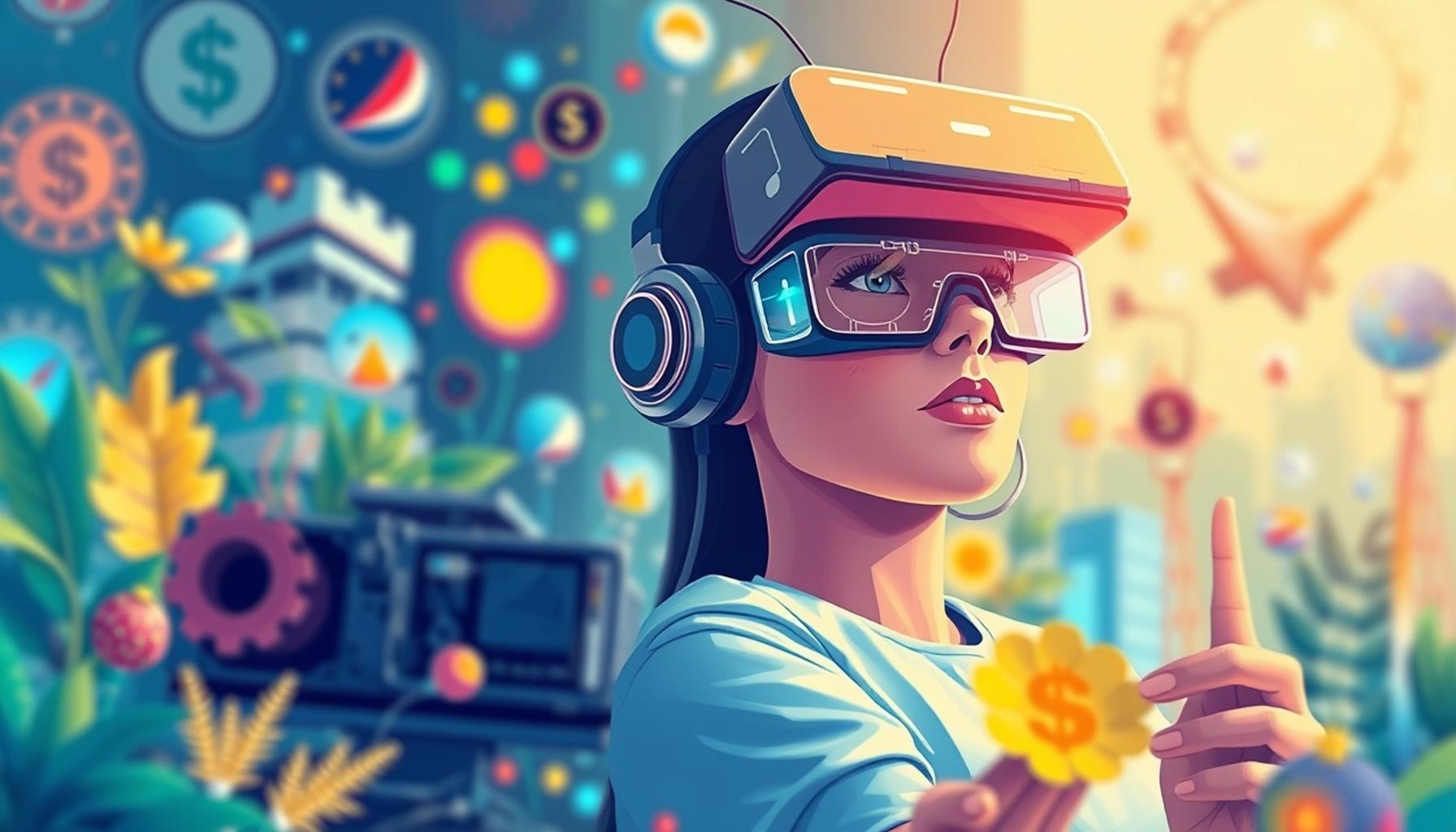
Understanding Augmented Reality and Virtual Reality
Over the past decade, augmented reality (AR) and virtual reality (VR) have paved the way for unique interactions with technology that blend the physical and digital worlds. These advancements have significantly influenced how we engage with content in various sectors, making them more accessible and engaging. While traditionally regarded as tools for gamers and tech enthusiasts, AR and VR are now becoming essential components in areas like education, healthcare, and even business applications.
To further understand these technologies, let’s clarify their primary functions:
- Augmented Reality: This technology enhances our real-world experiences by overlaying useful digital content, such as graphics, sounds, or textual information onto what we see. A practical example is the use of AR in mobile applications like Pokémon GO, where players can interact with virtual creatures placed in real-world settings using their smartphones.
- Virtual Reality: In contrast, VR immerses users in a completely digital environment that replaces their real-world surroundings. Using VR headsets, individuals can experience everything from flying through space to walking on a beach, offering unparalleled opportunities for escapism and exploration.
Impact on Entertainment
In the realm of entertainment, VR gaming has taken the industry by storm, enabling players to step into their favorite game worlds. Titles like Beat Saber and Half-Life: Alyx have captivated audiences by allowing them to physically interact within the game environment. Moreover, multiple gaming platforms now support VR, increasing accessibility for players across the United States.
Transforming Education
The educational sector is perhaps one of the most exciting areas experiencing the effects of AR and VR. With AR tools, complex concepts, such as human anatomy or astronomical systems, can be visualized in 3D. For instance, apps like Google Expeditions allow students to take virtual field trips to landmarks or even explore the solar system—all from their classroom. This interactive approach not only enhances engagement but also helps solidify understanding by appealing to different learning styles.
Broader Applications
Beyond education and entertainment, AR and VR are also making significant strides in live events and cultural experiences. Concerts and sporting events are beginning to incorporate virtual aspects, allowing fans to experience live entertainment from the comfort of their homes. Additionally, museums utilize virtual tours to make artistic and historical exhibits accessible to a wider audience, bridging geographical and physical barriers.
As we navigate through this digital era, it’s crucial to recognize that AR and VR are more than just trendy technologies; they are powerful tools that are transforming engagement in countless fields. By grasping their potential and applications, we can better appreciate the profound impacts they have on our daily lives and the future innovations they may bring.
CHECK OUT: Click here to explore more
Innovative Applications of AR and VR in Entertainment
The entertainment industry has experienced a remarkable transformation thanks to the advent of augmented reality (AR) and virtual reality (VR). These technologies have redefined the ways consumers interact with content, providing immersive experiences that were once confined to the realm of science fiction. The introduction of VR gaming, in particular, has created entirely new dimensions of gameplay, allowing players not only to see but to physically engage with their environments.
Games like Beat Saber and Pistol Whip have illustrated the extent to which VR can enhance user engagement. In these games, players swing lightsabers in rhythm with music or navigate through virtual scenarios while fending off enemies—all while standing in their living rooms. The total immersion offered by VR headsets, where players can look around and fully interact with the game world, creates an exhilarating experience that traditional gaming just can’t match.
However, the impact of these technologies extends far beyond solo gaming. The rise of social VR platforms, such as VRChat and Rec Room, enables users to connect and collaborate in virtual spaces, regardless of their physical location. This aspect of virtual communities not only reinvigorates social interaction among friends but also fosters new friendships among users from diverse backgrounds, enhancing the overall entertainment experience.
Educational Advancements Through AR and VR
In recent years, the role of AR and VR in education has emerged as one of their most promising applications. These technologies are not just supplementary resources; they are fundamentally reshaping how educational content is delivered and understood. By enveloping learners in interactive environments, AR and VR bring abstract concepts to life.
For example, imagine students studying human anatomy. With AR applications, they can visualize a 3D model of the heart, rotating it to examine various components from all angles, significantly enhancing their comprehension compared to traditional textbooks. Similarly, tools like Google Expeditions allow learners to embark on virtual field trips, experiencing significant global landmarks and environmental ecosystems without leaving their classrooms.
The benefits of AR and VR in education can be summarized as follows:
- Enhanced Engagement: Interactive experiences capture students’ interest and promote active participation.
- Improved Retention: Engaging with material visually and physically aids in retaining information.
- Diverse Learning Styles: Different formats cater to auditory, visual, and kinesthetic learners, making education more inclusive.
As more educational institutions adopt these technologies, the traditional methods of teaching are becoming increasingly hybridized, resulting in richer, more dynamic learning environments. This shift is especially significant in today’s fast-paced, technology-driven world, where students are more likely to thrive when learning is made interactive and relatable.
CHECK OUT: Click here to explore more
Transforming Experiences in Live Events and Training
The influence of AR and VR technologies reaches far beyond gaming and classroom experiences; they are also significantly transforming the landscape of live events and training across various sectors. By integrating these immersive technologies, organizations can create engaging and memorable experiences for attendees and learners alike.
In the realm of live events, AR has begun to revolutionize how audiences engage with performances and exhibitions. Concerts and festivals, such as the Coachella Valley Music and Arts Festival, have started to utilize AR applications that allow attendees to access interactive content directly through their smartphones or AR glasses. Imagine standing in a crowd and holding up your device to see additional visual effects, artist information, or even exclusive content only available through the app. This fusion of live performances and augmented visuals enhances the experience, making it even more captivating and unforgettable.
Moreover, the use of VR in live events can take participation to an entirely new level. Many sporting events offer VR experiences that allow fans to virtually step into the arena, viewing the game from different angles and perspectives, almost as if they were physically present. For instance, platforms like NextVR provide fans with the chance to sit courtside for an NBA game or feel the adrenaline rush as a participant in extreme sports, all from the comfort of their homes. This not only enhances the viewer experience but also opens new revenue streams for event organizers by selling virtual attendance tickets.
Elevating Corporate Training and Simulations
AR and VR are also making significant waves in corporate training and simulations, revolutionizing how employees acquire skills and knowledge. Traditional training methods often rely on passive learning through lectures or videos, which may not effectively engage employees. AR and VR change that by providing hands-on, interactive learning experiences that replicate real-world scenarios.
For example, companies in the healthcare sector are leveraging AR and VR to train medical professionals in complex procedures. VR simulations allow future surgeons to practice their skills in a risk-free environment, where they can work on intricate surgeries without endangering patients. This practical experience builds confidence and improves their ability to handle real surgical situations when the time comes.
Furthermore, businesses in industries such as manufacturing and aviation use AR to guide employees through intricate tasks by overlaying digital instructions directly onto physical equipment. This kind of training improves accuracy and efficiency while reducing the need for extensive manuals and in-person guidance. Honeywell, for instance, employs AR technology to assist technicians in aircraft maintenance, allowing for step-by-step real-time problem-solving that ensures precision and safety.
The benefits of integrating AR and VR into corporate training can be summarized as follows:
- Cost Efficiency: Reducing training-related costs by minimizing travel and physical resources.
- Safety: Providing a risk-free environment for employees to practice potentially dangerous tasks.
- Rapid Skill Acquisition: Accelerating the learning curve by allowing employees to practice in simulated environments.
As AR and VR technologies continue to mature, their applications across live events and corporate training will likely expand, fostering a culture of innovation and engagement among participants. These transformative experiences are not only shaping how we enjoy entertainment and learn but are also laying the groundwork for a future where immersive content becomes the norm rather than the exception.
SEE ALSO: Click here to read another article
Conclusion
In conclusion, augmented reality (AR) and virtual reality (VR) are reshaping not only the landscapes of entertainment and education but also the ways we experience live events and training programs. Through immersive experiences that blend the digital with the physical, these technologies captivate audiences and enhance learning outcomes. As highlighted in the discussions, AR enhances live performances by offering interactive content, while VR allows sports fans to engage with events as if they were truly there, providing unprecedented access and engagement.
Moreover, in the educational and corporate realms, AR and VR are proving invaluable in transforming training methodologies. By facilitating hands-on, risk-free learning experiences, these technologies allow professionals across various industries to develop their skills effectively and efficiently. For example, medical practitioners can hone their surgical techniques without the consequences of real-life procedures, and industry workers can operate complex machinery with guided support, ensuring safety and precision.
As these technologies continue to evolve, we can anticipate even more innovative applications, further blurring the lines between reality and the digital world. In doing so, AR and VR are not merely auxiliary tools but are becoming integral to how we learn, train, and entertain ourselves. The future holds exciting possibilities where immersive experiences create richer, more engaging environments for both education and enjoyment, marking a significant shift in how we perceive and interact with the world around us.

Linda Carter
Linda Carter is a writer and expert known for producing clear, engaging, and easy-to-understand content. With solid experience guiding people in achieving their goals, she shares valuable insights and practical guidance. Her mission is to support readers in making informed choices and achieving significant progress.